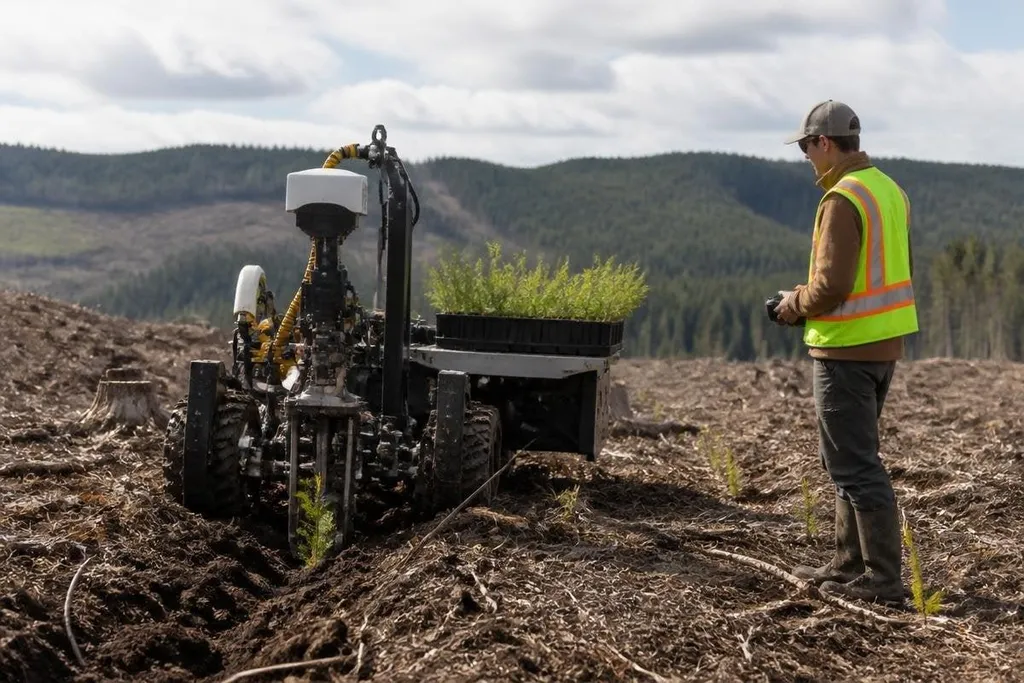
Tree-planting robots face a harder test than placing a seed in soil. They need to lower the cost of field work, keep plants alive, and fit the schedules of people who manage land.
That creates several business paths, from machine sales to planting services. The opportunity is real, but the buyer will pay for surviving trees, not a clever arm movement.
- Planting contractors could rent machines by the day or by the job.
- Land managers could buy systems for repeat work across large sites.
- Robot makers could earn from maintenance, mapping, software, or replacement parts.
The first sale is a service
Selling a robot may be the hardest route at the start. A landowner would need trained staff, transport, storage, repairs, and a plan for work outside the planting season. Those costs can make ownership difficult even when the machine works well.
A planting service avoids much of that burden. The customer pays for prepared ground, planted seedlings, and work records. The service provider owns the robot and can use it across several sites instead of leaving an expensive machine idle.
That model also gives the maker a clearer path to field data. Each job can show how long setup takes, how often the robot stops, and which soil or terrain conditions cause trouble. Those details matter more than a short demonstration on prepared ground.
Where the machine can earn money
The robot does not need to handle every part of forestry work to create a business. It can focus on tasks where repeated movement, distance, or worker access makes manual planting costly.
Possible buyers include nurseries and growers that need consistent planting in prepared beds. Forestry contractors may need machines across many sites and changing ground conditions, while mine restoration teams may value careful access planning.
Utilities and infrastructure firms could use the machines to restore land after construction work. Public land agencies may also need planting locations and follow-up care recorded for later checks.
Each customer needs a different machine. A nursery may value speed and repeatable spacing. A restoration team may care more about ground clearance, navigation, and the ability to carry supplies over rough terrain.
That gives tree-planting robot makers a practical market test: can one buyer run the machine often enough to justify its price, and can the buyer record fewer labor hours or more surviving trees? Robot24.com business robotics reporting can place those claims beside the task, site, date, and people still needed. The next problem starts after the tree leaves the robot: keeping it alive.
The hard part comes after planting
A planting robot can place a seedling correctly and still fail its customer if too many plants die. The business model may need to include soil checks, watering plans, replacement planting, and records that show where each plant went.
That creates room for related products. A company could sell a robot with a planting tool, a location system, and software that stores field records. Another company might offer the machine as part of a wider land-care contract. These are possible models, not proof that any one of them works today.
The robot also needs to handle ordinary field problems. Wet soil can change traction. Rocks can stop a planting tool. Slopes can affect stability.
A machine that works only in dry, level ground may need a narrow job description, which limits its price and use. The evidence supplied for this article names no robot, deployment, price, survival rate, or field trial, so any claim about payback remains unproven until a company publishes those figures from working sites.
A buyer's checklist
Before funding a tree-planting robot, ask:
- What gets measured? Planting speed alone is not enough. Record survival, spacing, downtime, and rework.
- Who runs it? Count training, supervision, loading, transport, and repairs.
- Where does it work? Define limits for slope, soil, weather, access, and plant size.
- What happens after planting? Set out who checks plants and replaces failed ones.
- How often is it used? Compare the purchase cost with the number of jobs each season.
- What remains unproven? Ask for field records rather than a short edited video.
I’d start with a planting service, not a large equipment sale. It puts the machine near real work while the owner learns which conditions support repeatable results.
The next useful number is not how many seedlings a robot places in one hour. It is the cost of each living tree after one full growing season.